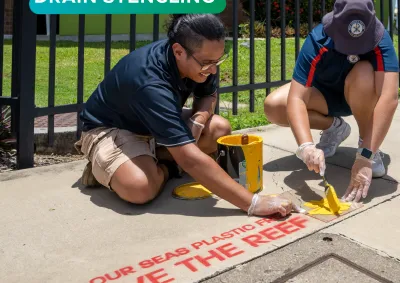
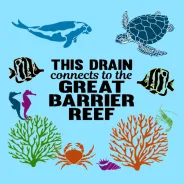
Step by step guide on how to conduct a drain stencilling activity with your students. Includes stencil images to assist with designing your school's drain art.
Reef Guardian School STEAM activities arranged in an activity booklet. Encourages schools worldwide to engage in one or all eight unique activities for primary and high school students.
Power point presentation aimed to introduce the design and technology unit of work and present a case study of Green Sea Turtles for students to explore wildlife transportation. This is resource 3 of 3 in this series. Other resources include a teacher guide and a student workbook.
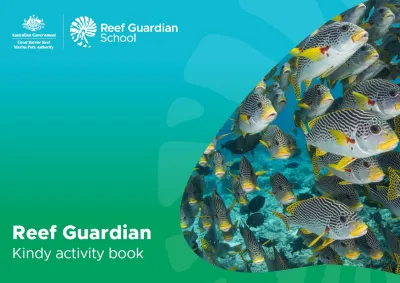
The Reef Guardian Kindy Activity book connects Early Years Learning Framework (EYLF) v2.0 principles with marine conservation, transforming sustainability (interconnectedness) into active stewardship (hands-on care). It contains 5 interactive reef related activities for Early Learning and Kindergarten students.
Teacher Resource guide to assist with planning, alignment to Australian Curriculum and delivery of the Wildlife Express unit. This is resource 1 of 3 in the series. Other resources in this series include:
A Wildlife Express PowerPoint Presentation - a design and technology unit of work with a case study of Green sea turtles for students to explore wildlife transportation.
A student workbook.
Here is what some of our Reef Guardian Stewards at Grow Aitutaki have been achieving in the Cook Islands. This exciting, emerging organisation shares its visually beautiful and informative yearly report.
Remote Reach of Rubbish!
Watch this fantastic, short video that Tangaroa Blue have put out about an impactful marine debris project on the Cocos Keeling Islands as they attempt to turn the tide on the ocean plastic affecting their coastline.
An eye-opening insight to build understanding of how all the oceans and countries are connected and the impact people’s actions have on distant ecosystems.
Creating drain art to increase awareness about marine debris has become faster and easier with our new Drain Stencil Kit. If your school is located in the Reef Catchment you can borrow a kit to assist with this hands-on activity that can be included in your C.L.A.S=S actions.
As part of Tangaroa Blue's month-long cleanup, Earthwatch and the North Queensland Conservation Council are hosting a community clean up event in Townsville on Sunday 18 October 2026.