




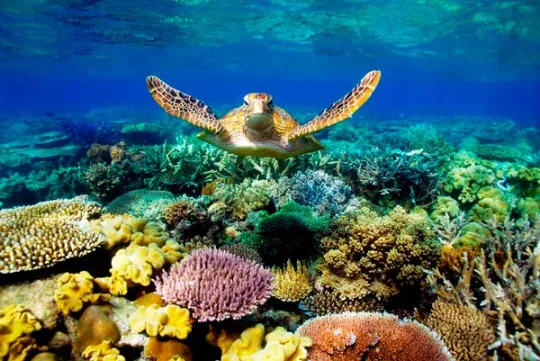
A Personal Commitment to Reef Protection: Dany Island is a small private island off the coast of Santo, Vanuatu, but its environmental significance is far greater than its size. Owned and actively managed by Dany Girgis and his team, the island has become a rare example of how private land stewardship, community cooperation and conservation can work together to protect fragile marine ecosystems. What began as a personal vision has grown into a recognised conservation area that protects coral reefs, seagrass meadows, endangered species and a unique natural surf break - all while supporting education, tourism and local livelihoods.
A Sanctuary for Sea Turtles: Dany Island is a known nesting site for green and hawksbill sea turtles, both of which return year after year due to strong natal homing behavior. The island’s beaches are monitored and protected, with artificial lighting kept to a minimum and human disturbance carefully managed during nesting seasons. Guests and visiting school groups are educated about turtle life cycles, threats such as plastics and climate change, and the importance of protecting nesting habitats. Turtle conservation on Dany Island is not theoretical - it is happening in real time, on real beaches, with measurable outcomes.
Dugongs and Seagrass Meadows: The surrounding waters of Dany Island include healthy seagrass beds, which support dugongs - one of the most vulnerable marine mammals in the Pacific. These areas are strictly protected, with boat access controlled and no anchoring permitted. Local Ni-Vanuatu knowledge, combined with modern conservation practices, plays a key role in safeguarding these habitats. The island works closely with traditional custodians and local authorities to ensure dugong feeding areas around Dany Island remain undisturbed.
A Protected Surf Break and Reef System: Unusually, Dany Island also holds legal title to a natural surf break, which is protected as part of the island’s conservation zone. The unique side-effect is a private surfing paradise. This reef system nearby supports coral growth, reef fish and invertebrates while also demonstrating how recreational use can coexist with environmental protection when properly managed. Fishing on the reef is banned, reef damage is actively prevented, and visitors are educated on reef-safe behavior both in and out of the water.
The Nautilus - A Living Fossil: Occasionally sighted in the waters near the island, the nautilus is one of the ocean’s most ancient creatures. Often described as a “living fossil”, its presence is a strong indicator of a healthy marine environment. Protecting the deep-water reef slopes and maintaining water quality are essential to preserving these rare sightings, further reinforcing the importance of holistic reef management.
Education Through Experience: Dany Island functions as a living classroom. Rather than learning about reef conservation from textbooks alone, students and visitors can see first-hand how ecosystems function and how human decisions directly affect marine life.
Topics explored include:
- Coral reef resilience and recovery
- Endangered species protection
- Sustainable tourism
- Traditional knowledge and modern conservation
- Climate impacts on island ecosystems
- These experiences help turn awareness into genuine stewardship.
A Model for Private Conservation: Dany Island demonstrates that conservation leadership does not only come from governments or large organizations. Private individuals, working respectfully with local communities and authorities, can play a powerful role in protecting the reef for future generations. Through active management, education and long-term commitment, Dany Island continues to prove that protecting the ocean is not just possible - it is achievable, measurable and inspiring. https://danyisland.com/conservation/